Weekly Edition · 24 August 2026
Designing a Tiny Home Office and WFH Nook
Maximize your limited footprint with space-saving desks, ergonomic layouts, and smart storage designed specifically for tiny home living.
This Week
Designing a tiny home office and work from home nook
Maximize your limited footprint with space-saving desks, ergonomic layouts, and smart storage designed specifically for tiny home living.
Ergonomics and Layout in Under Two Square Meters
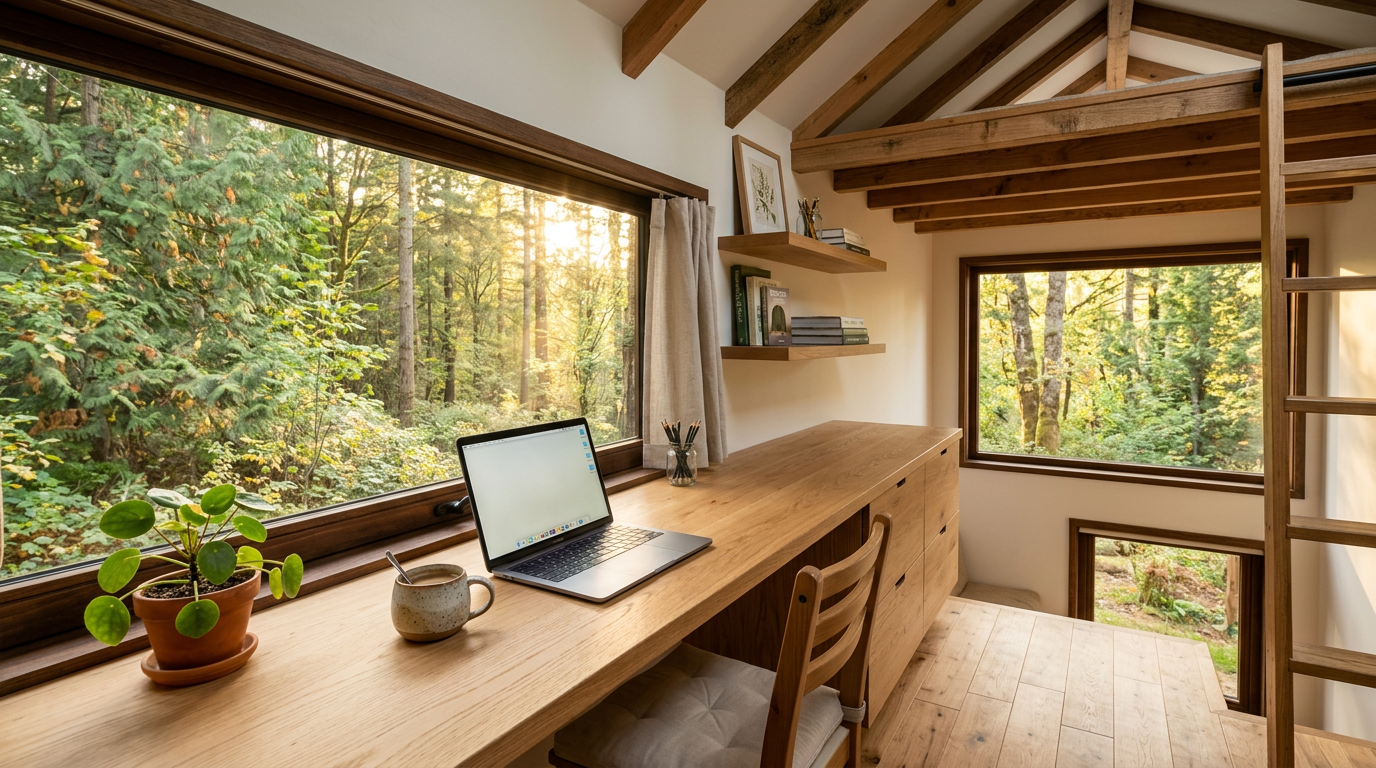
Working from home in a tiny house requires a strict evaluation of physical space. You do not need a dedicated room to be productive, but you do need dedicated zoning. A successful workspace requires a footprint of just 1.2 meters [4 feet] of width and 60 centimeters [24 inches] of depth. To maintain physical comfort over an eight-hour workday, prioritize desk height over overall size. Standard desks sit at 74 centimeters [29 inches] high, but custom-building your nook allows you to tailor this measurement to your exact forearm height when seated, preventing neck strain and shoulder fatigue in tight quarters.
When planning your layout, consider the traffic flow of your tiny home. Positioning your WFH nook under a loft staircase or at the end of a kitchen counter uses dead space that would otherwise go wasted. Avoid placing your back directly to the main pathway of the house if you share the space, as this can create visual distractions during video calls. Instead, aim for a corner installation or a pull-out desk drawer configuration that can slide entirely out of sight once the workday concludes, preserving your transition from work to leisure.
Dual-Purpose Furniture and Fold-Away Desks
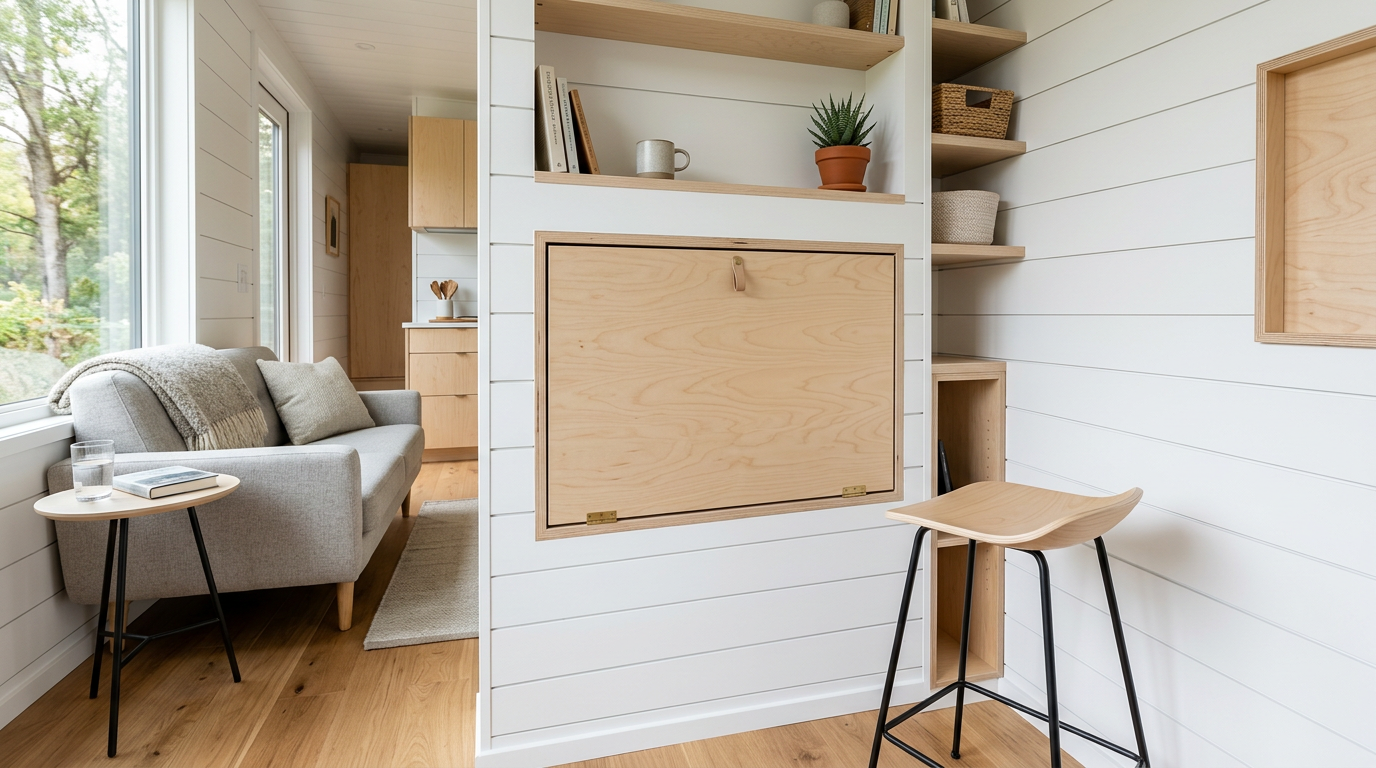
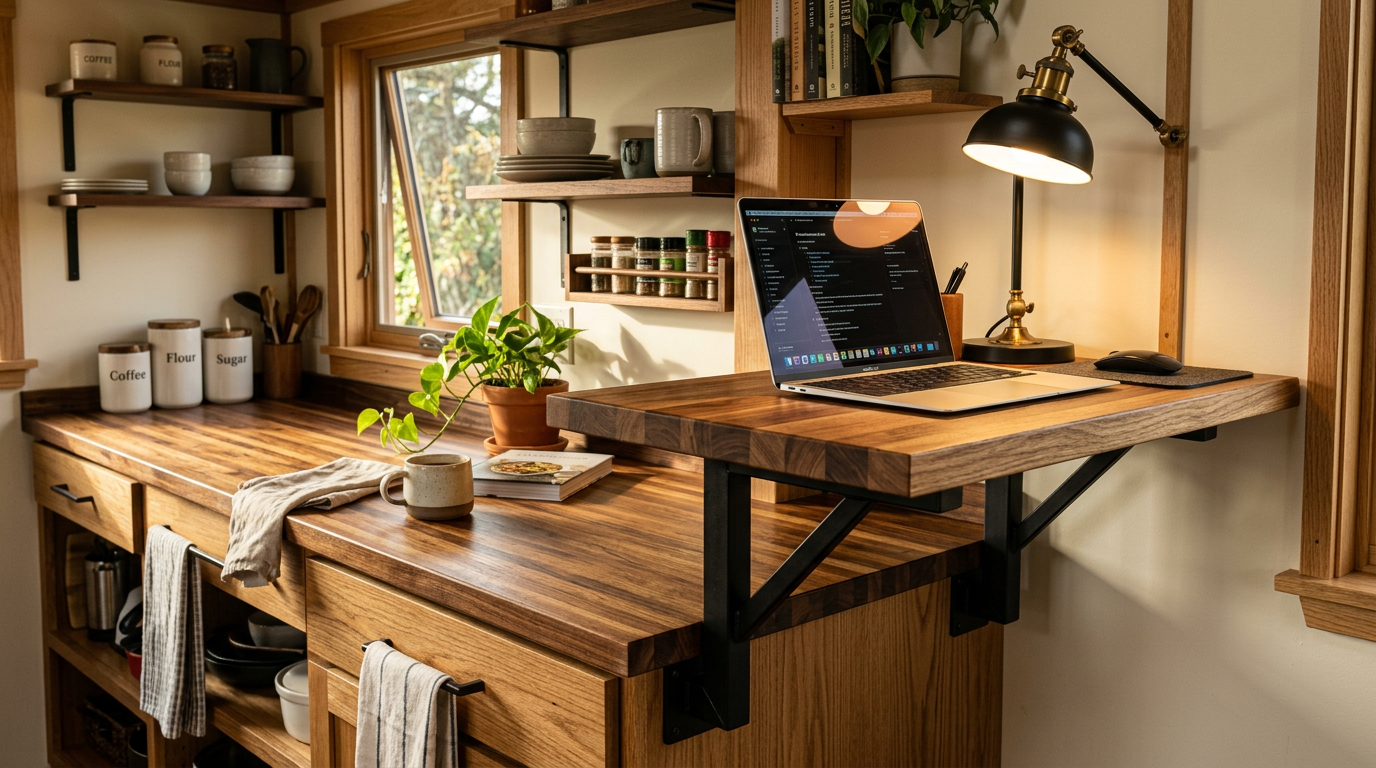
In a tiny home, every surface must earn its keep. Dual-purpose furniture is the cornerstone of a functional tiny office. A popular DIY solution is the drop-leaf desk, which hinges flat against the wall when not in use, protruding less than 10 centimeters [4 inches] into your living space. To build this, use heavy-duty folding brackets rated for at least 50 kilograms [110 pounds] to ensure the writing surface is rigid enough for heavy typing. Alternatively, you can design your kitchen dining bar to double as your workstation, ensuring power access is nearby.
Another excellent choice is the sliding keyboard tray hidden beneath a primary countertop. By mounting heavy-duty drawer slides under a kitchen or living room counter, you can pull out your keyboard and mouse surface only when needed. This preserves precious surface area on top of the counter for other daily tasks. When designing these sliding elements, ensure you install locking slides that prevent the tray from moving while you type, maintaining a stable and frustration-free working surface throughout your busy day.
Cable Management and Integrated Power
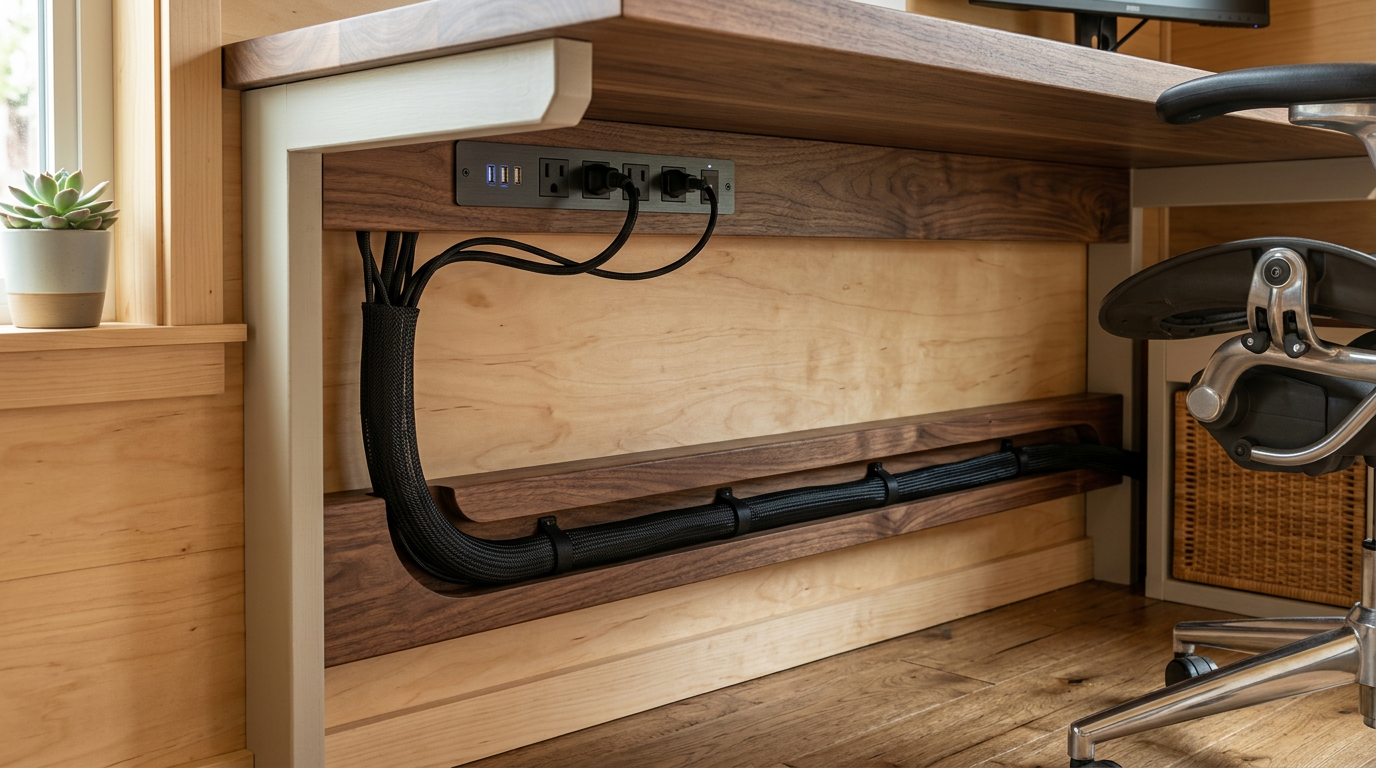
Nothing ruins the clean aesthetic of a tiny home faster than a tangled nest of power cords. When space is limited, visual clutter translates directly to mental clutter. Start your cable management strategy during the framing stage of your build by running dedicated conduits to your desk area. Install recessed power boxes with integrated USB-A and USB-C ports directly into your desktop or the adjacent wall. This keeps bulky power adapters flush against the surface, allowing you to push your desk flat against the wall framing.
For retrofitting existing tiny homes, utilize under-desk wire trays or J-channel cable raceways screwed directly to the underside of your work surface. Group your power bricks and cords together using hook-and-loop wraps rather than plastic zip ties, which allows for easy modifications when you upgrade your tech. If you use a laptop dock, mount it vertically to the underside of the desk or on an adjacent wall using customized brackets, freeing up valuable desktop surface space for your notebooks and reference materials.
Lighting, Storage, and Virtual Backdrops
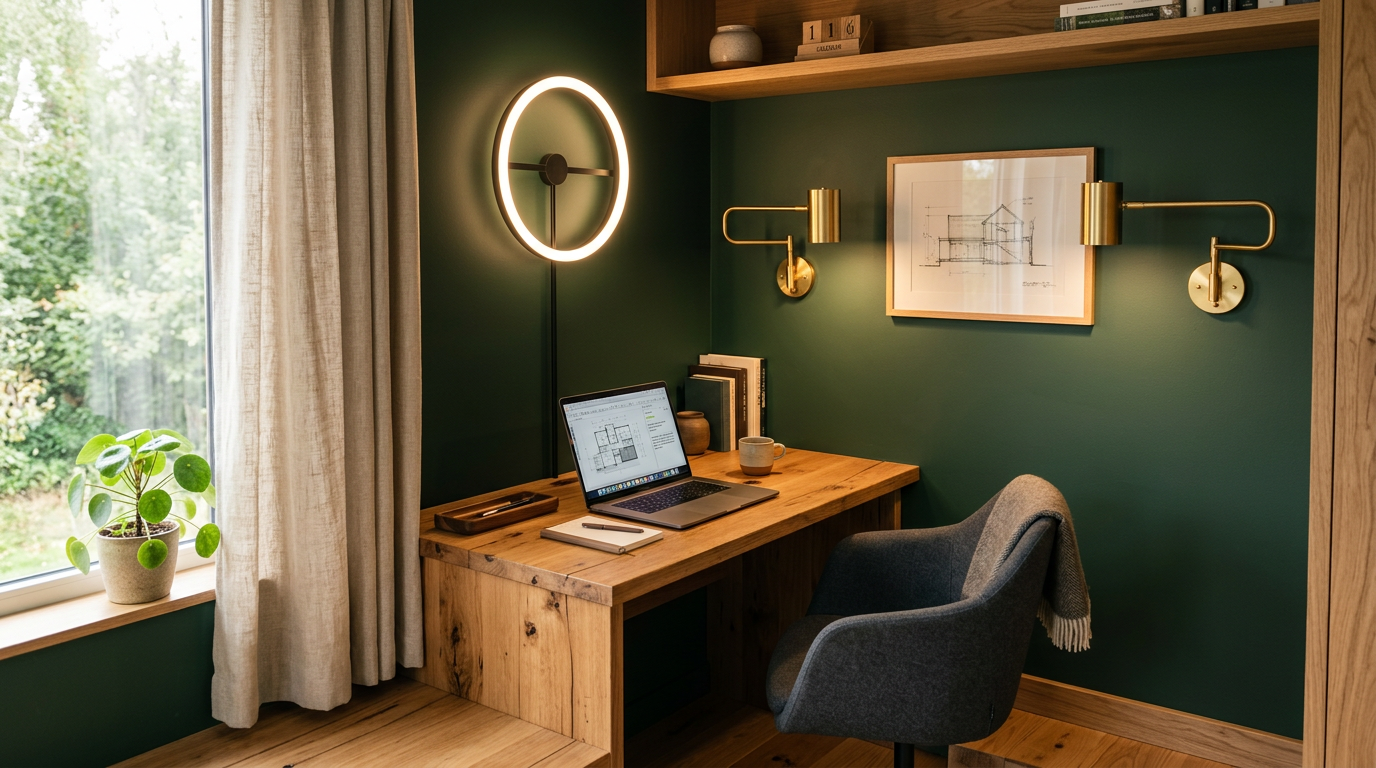
Proper lighting is essential for preventing eye strain in small spaces, especially when you lack the room for bulky floor lamps. Combine natural light from a nearby window with adjustable task lighting, such as a monitor light bar that clips directly onto your screen. This directs light down onto your work area without taking up any valuable desk space or causing screen glare. For video calls, choose a warm-white LED light source positioned at a 45-degree angle to your face to soften shadows and present a professional image to your clients or colleagues.
Finally, consider your background for virtual meetings. In a tiny home, your kitchen, bed, or living area is often visible behind your chair. You can solve this by painting the wall behind your workspace a contrasting accent color or installing lightweight wooden vertical slats to create a clean, intentional backdrop. Use overhead cabinets with sliding doors rather than swing-out doors to store your office supplies. Sliding doors require zero clearance to open, ensuring you can access your files even when sitting in a tightly confined desk space.