Weekly Edition · 9 November 2026
Off-Grid Hybrid Hot Water for Tiny Bathrooms
Combine solar thermal energy and instant gas back-up to guarantee endless hot water in your off-grid tiny home bathroom.
This Week
Solar hot water and instant gas for tiny bathrooms
Combine solar thermal energy and instant gas back-up to guarantee endless hot water in your off-grid tiny home bathroom.
The Power of Hybrid Off-Grid Systems
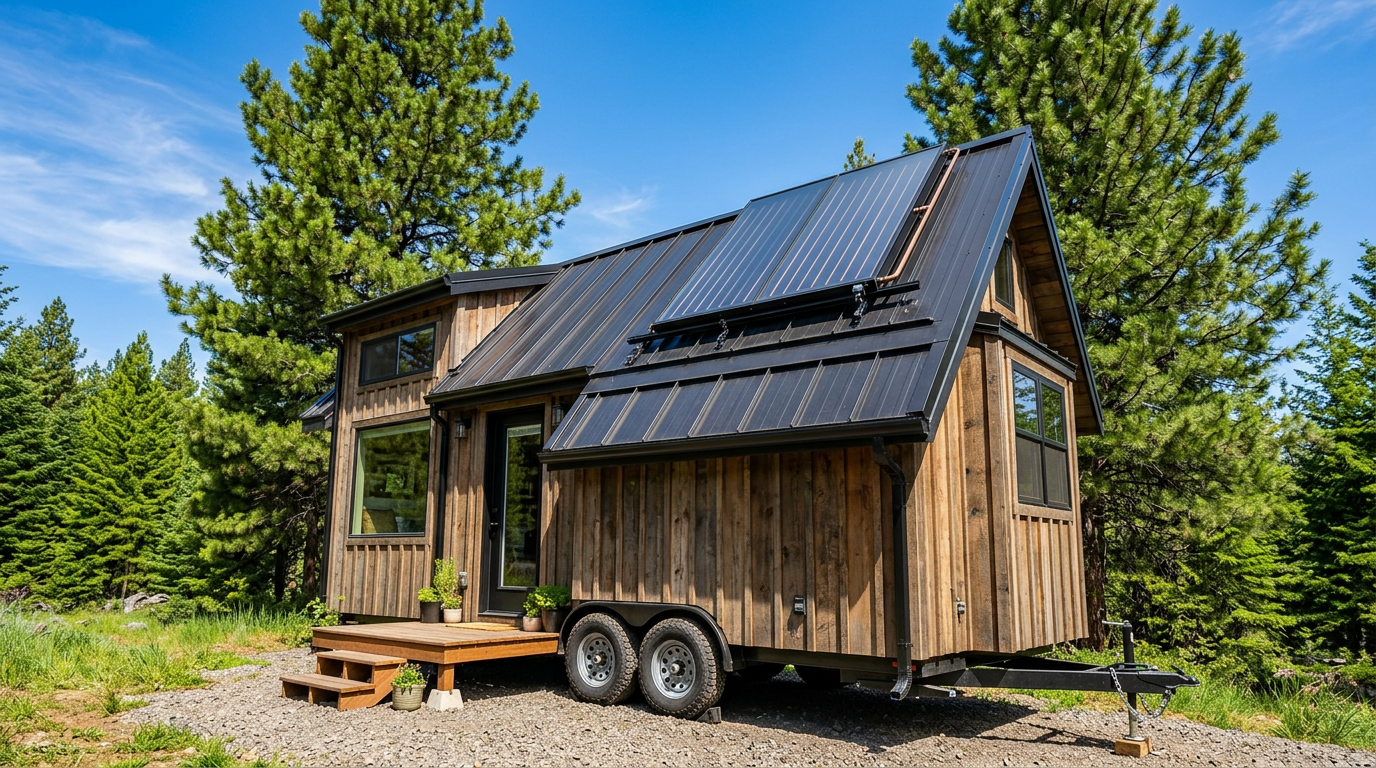
Heating water consumes a massive portion of an off-grid tiny home's energy budget. While standard electric water heaters draw too much current for modest solar battery banks, a hybrid system pairing solar thermal collectors with an instantaneous liquid petroleum gas (LPG) heater offers the perfect balance. Solar thermal panels collect free energy from the sun during the day, heating a small, well-insulated storage tank. When the sun goes down or winter skies turn grey, the instantaneous gas heater seamlessly kicks in to boost the water to your desired temperature, ensuring you never face a freezing shower.
This configuration optimizes both space and fuel. Instead of hauling heavy LPG bottles constantly, you rely primarily on the sun for nine months of the year. The instant gas unit acts as a reliable gatekeeper, only igniting when the solar-preheated water falls below your target threshold, typically around 50 degrees Celsius [122 degrees Fahrenheit]. This dual-source approach reduces your overall gas consumption by up to 70 percent while keeping your electrical draw virtually at zero, preserving your battery bank for lights and appliances.
Sizing Collectors and Storage Tanks
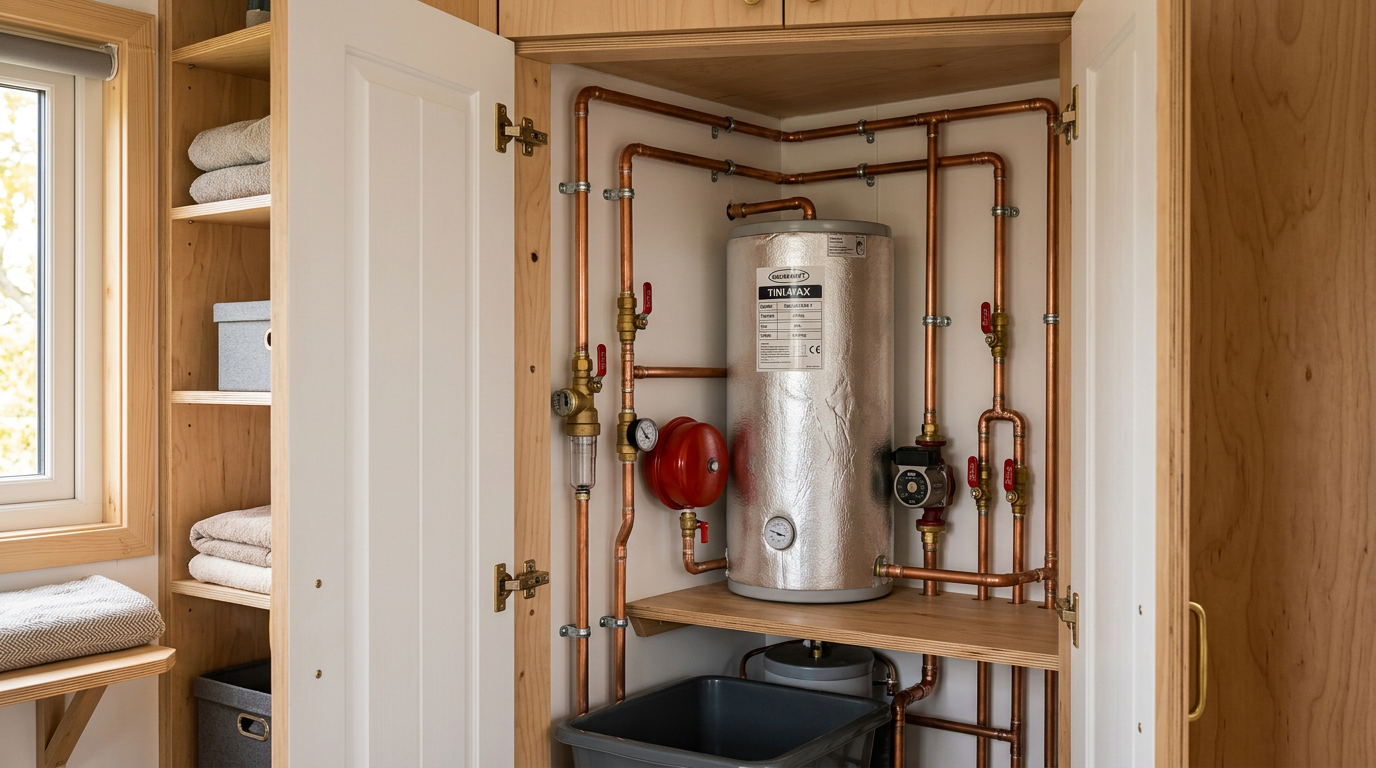
Sizing a solar hot water system for a tiny house requires careful calculation of weight and roof space. A standard residential setup is far too heavy, but a compact 80-liter to 120-liter [21 to 31 gallon] insulated tank is ideal for one or two residents. When filled, a 100-liter [26 gallon] tank weighs around 130 kilograms [286 pounds] including the vessel, so it must be positioned directly over the trailer axles to maintain towing balance.
Pair this compact tank with a single flat-plate collector or a manifold of 10 evacuated tubes. This small collector array footprint measures roughly 1 meter by 1.5 meters [3.3 feet by 4.9 feet], which fits comfortably on a tiny home roof without crowding your photovoltaic solar panels. Ensure the collector is angled to match your latitude plus 10 degrees to optimize winter solar gain when you need the thermal boost most.
Plumbing the Bypass and Tempering Valves
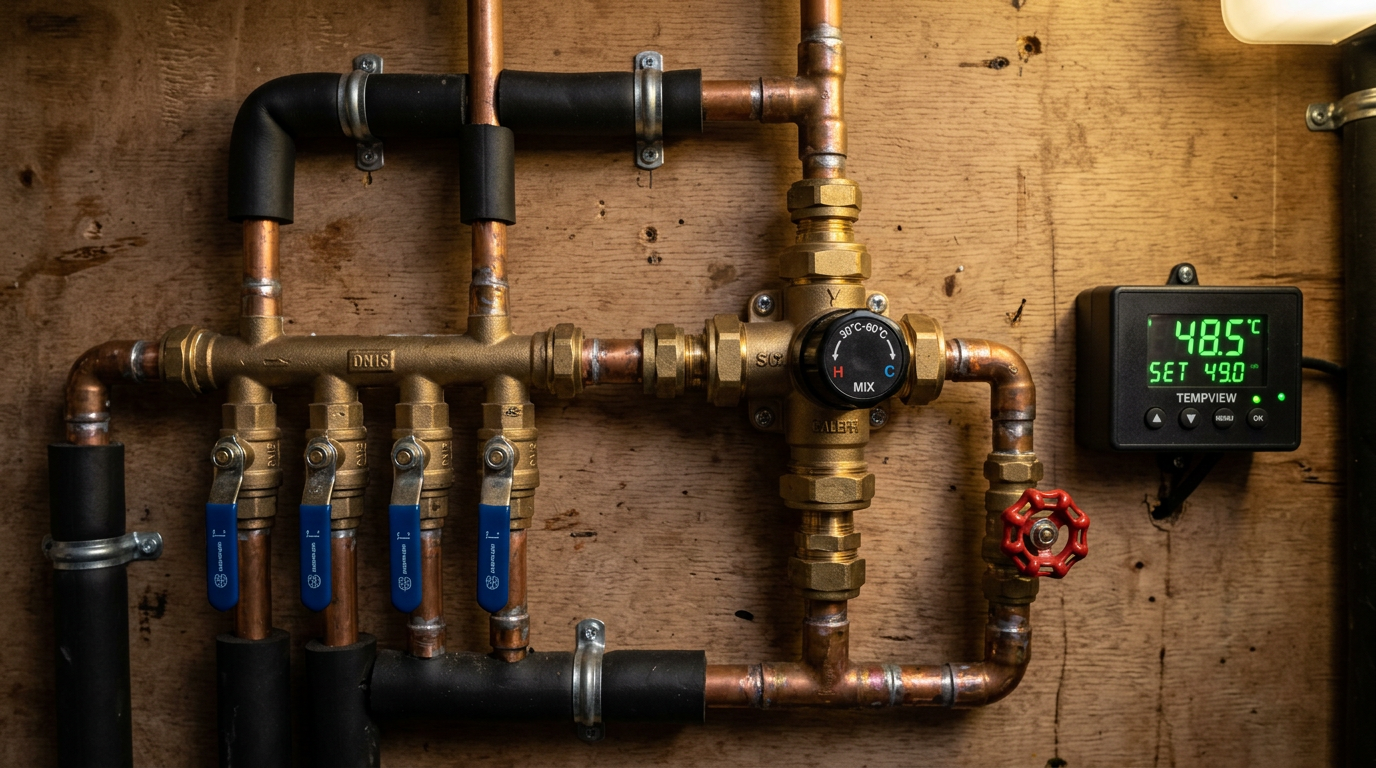
The secret to a functioning hybrid system lies in the plumbing schematic. Water from your storage tank travels through a high-quality thermostatic mixing valve—often called a tempering valve—before reaching the instant gas heater. This valve mixes scalding solar-heated water with cold intake water to deliver a safe, steady 45 to 50 degrees Celsius [113 to 122 degrees Fahrenheit] downstream. If the solar tank is hot enough, a solar bypass valve diverts this hot water directly to your shower, bypassing the gas heater entirely.
If the solar tank temperature drops below your target, the water routes through the instant gas heater. Look for a modulating gas unit rated at 12 to 16 liters per minute [3.2 to 4.2 gallons per minute]. Modulating burners automatically adjust their flame height based on the incoming water temperature. If the incoming solar-heated water is already 38 degrees Celsius [100 degrees Fahrenheit], the gas burner burns a tiny, highly efficient flame just to lift it those final few degrees, saving vast amounts of propane.
Ventilation, Safety, and Winter Care
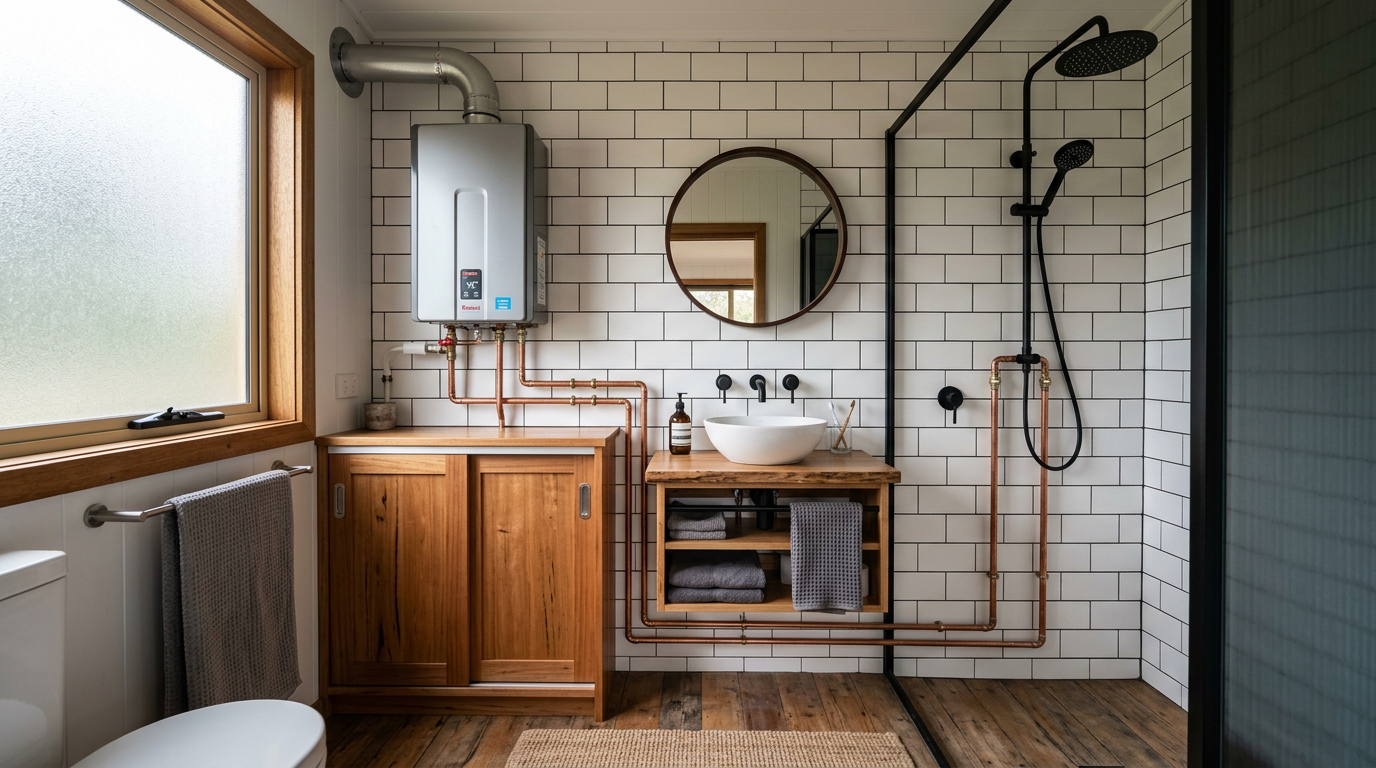
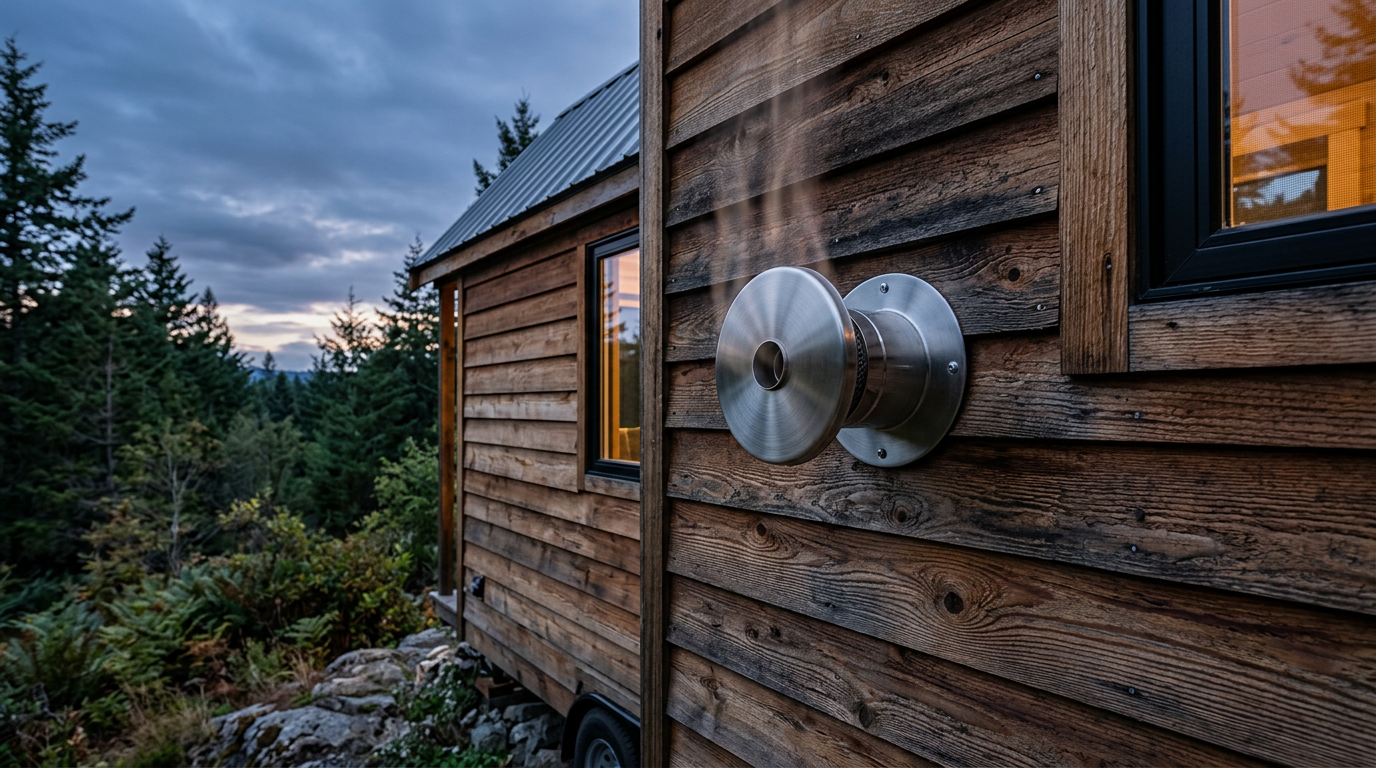
Installing gas appliances inside tiny bathrooms demands strict adherence to safety standards. Always select a room-sealed, balanced-flue gas heater. These units draw combustion air from outside through a coaxial pipe and vent exhaust gases directly back outdoors, eliminating any risk of carbon monoxide building up in your compact living space. Keep the external exhaust vent at least 300 millimeters [12 inches] away from any openable windows or doors to comply with local building regulations.
If you live in a climate prone to freezing temperatures, choose an indirect closed-loop solar system. Fill the solar loop with food-grade propylene glycol instead of plain water to prevent catastrophic pipe bursts during winter freezes. Additionally, ensure your external gas heater has built-in electric freeze protection electrodes, or mount the gas unit within an insulated, externally vented utility cupboard to keep the heat-exchanger safe from icy winds.