Weekly Edition · 17 November 2025
Off-Grid Tiny Home Heating and Cooling on a Budget
Keep your tiny home comfortable year-round without draining your battery bank. Discover practical, low-power heating and cooling tactics that work.
This Week
Tiny home heating and cooling on a tight power budget
Keep your tiny home comfortable year-round without draining your battery bank. Discover practical, low-power heating and cooling tactics that work.
Start with the Envelope: Insulation First
When you are operating on a limited power budget, the most efficient heating or cooling system is the one you do not have to turn on. Your building envelope is your primary defense against extreme temperatures. In a tiny home, where space is at a premium, choosing the right insulation is critical. Opting for closed-cell spray foam or high-density mineral wool batts provides excellent thermal resistance per millimeter. Aim for at least R-value 15 in the walls and R-30 in the ceiling and floor. Air sealing is equally important; a meticulous application of vapor-permeable house wrap and specialized flashing tape around windows and doors will prevent drafts that rob your home of its conditioned air.
Beyond insulation, passive solar design plays a massive role in regulating temperature. If you are still in the planning phase, orient your tiny home to maximize winter sun through south-facing windows while planning for removable exterior awnings to block intense summer rays. Double-glazed, argon-filled windows are non-negotiable for keeping heat inside during winter and outside during summer. To introduce thermal mass without adding immense weight to your trailer, consider dense interior materials like thick tongue-and-groove timber cladding or heavy earthen plaster accents. These materials absorb ambient heat during the day and slowly release it as temperatures drop overnight.
Smart, Low-Wattage Heating Solutions
If you are living off-grid or on a restricted 15-amp shore power connection, traditional electric resistance space heaters are out of the question because they easily draw 1500 watts or more. Instead, look to direct-vent propane heaters. These units mount to an exterior wall, drawing combustion air from outside and venting exhaust gases directly back out, keeping your indoor air dry and safe. They require zero electricity to run if they use a piezo ignition and a millivolt thermostat, or just a tiny 12-volt draw to power a small distribution fan that circulates the warm air throughout your loft and living areas.
Another highly efficient option gaining popularity in the DIY community is the diesel parking heater. Originally designed for commercial trucks and boats, these compact units run on diesel fuel and draw as little as 10 to 40 watts of 12-volt DC power to run their fuel pump and internal fan. They provide incredibly dry, consistent heat and can warm a well-insulated 24-square-meter [258-square-foot] tiny home in minutes. Alternatively, a small, solid-fuel micro wood stove offers unmatched coziness and completely independent heating, though it requires a constant supply of dry firewood and regular maintenance to operate safely.
Keeping Cool on a Tight Power Limit
Cooling a tiny home on a tight power budget requires a shift from active refrigeration to strategic ventilation and air movement. In a small space, hot air naturally rises into your sleeping loft, making it uncomfortable at night. To combat this, install a high-quality, reversible 12-volt ceiling fan directly above the loft. By running the fan on exhaust mode, you pull hot air out of the ceiling while drawing cooler air in through low-profile, shaded windows on the shaded side of the house. This creates a natural thermal chimney effect, replacing the entire volume of indoor air within minutes while consuming less than 30 watts of power.
In arid climates, a small evaporative cooler can lower indoor temperatures by several degrees while drawing a fraction of the electricity used by standard air conditioners. However, if you live in a humid region, a highly efficient 12-volt or 24-volt direct-current (DC) mini-split air conditioner is the gold standard. Unlike standard alternating-current (AC) units that require power-hungry inverters, these DC-native mini-splits connect directly to your battery bank. They feature variable-speed inverter compressors that ramp down to draw as little as 150 to 300 watts once the target temperature is reached, allowing you to run them off a modest solar setup.
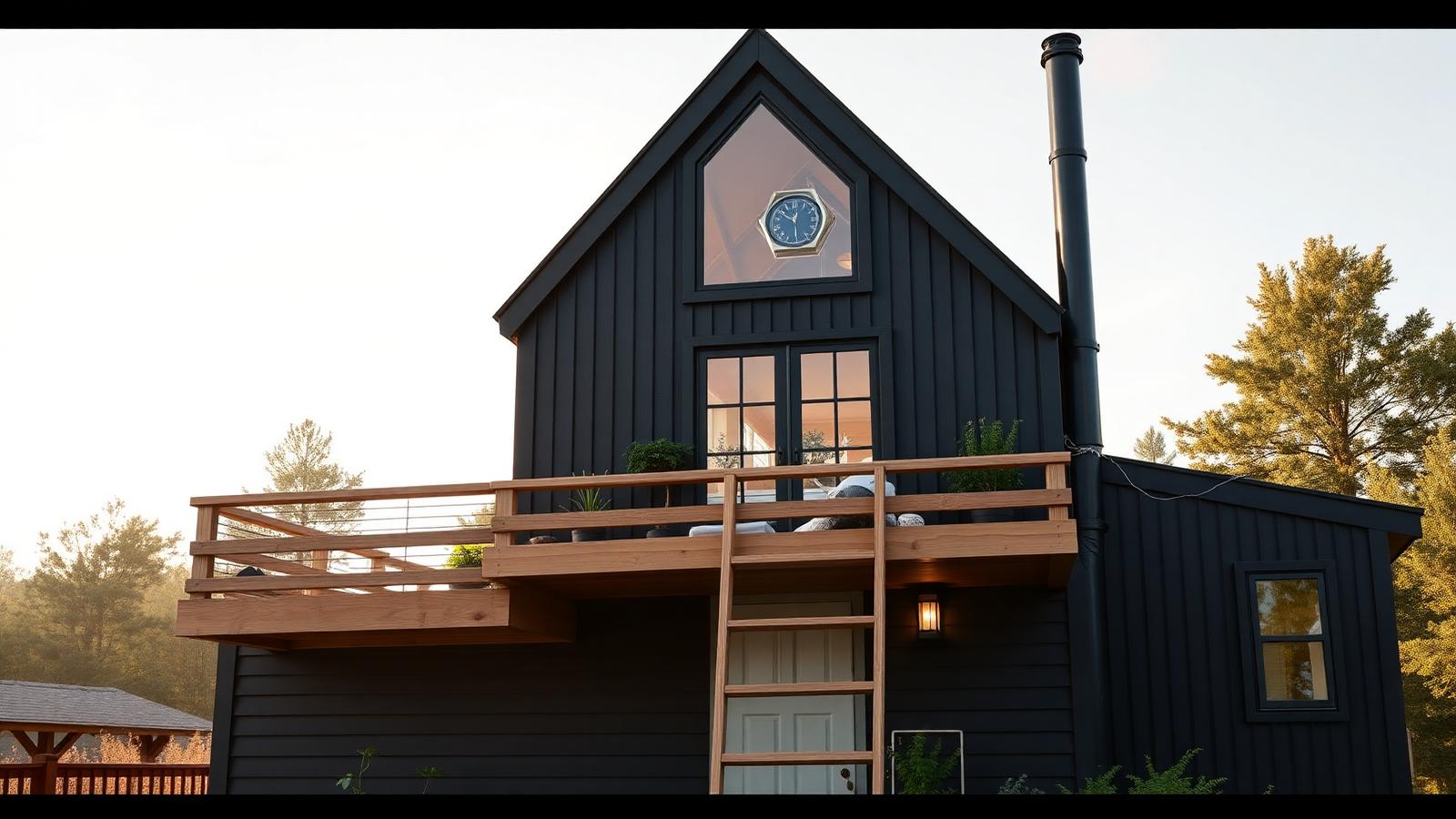
Managing Humidity and Indoor Air Quality
Because a low-power tiny home relies on high-quality insulation and tight air sealing, managing indoor moisture becomes a critical challenge. Activities like cooking, showering, and even breathing release liters of water vapor into the air daily. If this moisture is not managed, it condenses on cold surfaces, leading to mold growth and reducing the effectiveness of your insulation. A standard bathroom exhaust fan helps, but it throws away your hard-earned heated or cooled air. The solution is a localized Heat Recovery Ventilator (HRV) or Energy Recovery Ventilator (ERV). These small, through-wall units run continuously on just 3 to 5 watts of power.
An HRV works by passing incoming fresh air and outgoing stale air through a ceramic heat exchanger. In the winter, the outgoing warm air heats the incoming cold air, retaining up to 90 percent of the indoor heat while exchanging the air. In summer, the process reverses to keep incoming air cool. To complement this system, consider a passive dehumidifier or a small, compressor-free Peltier-effect dehumidifier for humid nights. By keeping your indoor relative humidity between 40 and 60 percent, the air naturally feels cooler in the summer and warmer in the winter, reducing your reliance on active climate control systems.