Weekly Edition · 5 October 2026
Tiny Home Landscaping: Maximizing Your Outdoor Micro-Garden
Transform the small footprint around your tiny house with vertical planters, edible borders, and smart multi-functional outdoor living spaces.
This Week
Tiny home landscaping and micro gardens
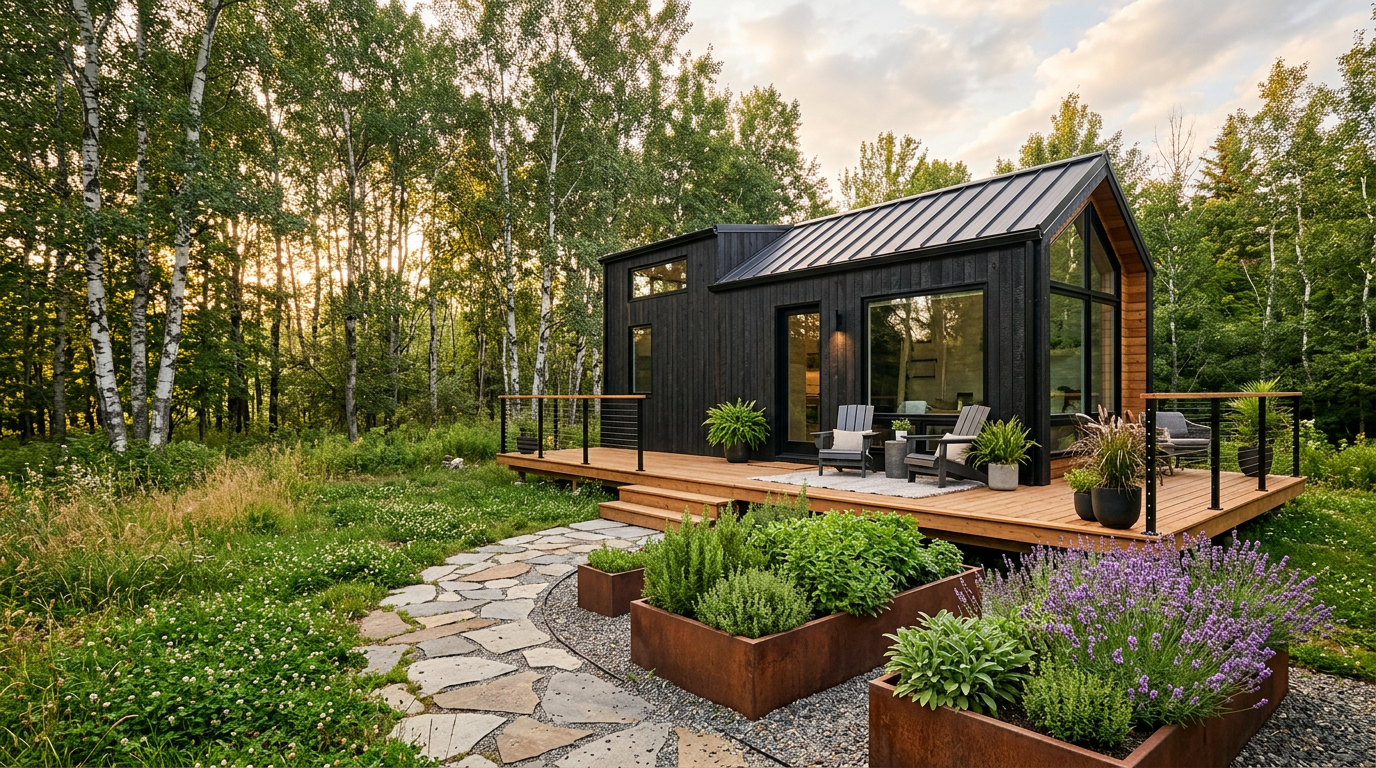
Transform the small footprint around your tiny house with vertical planters, edible borders, and smart multi-functional outdoor living spaces.
Laying the Groundwork: Zoning and Drainage
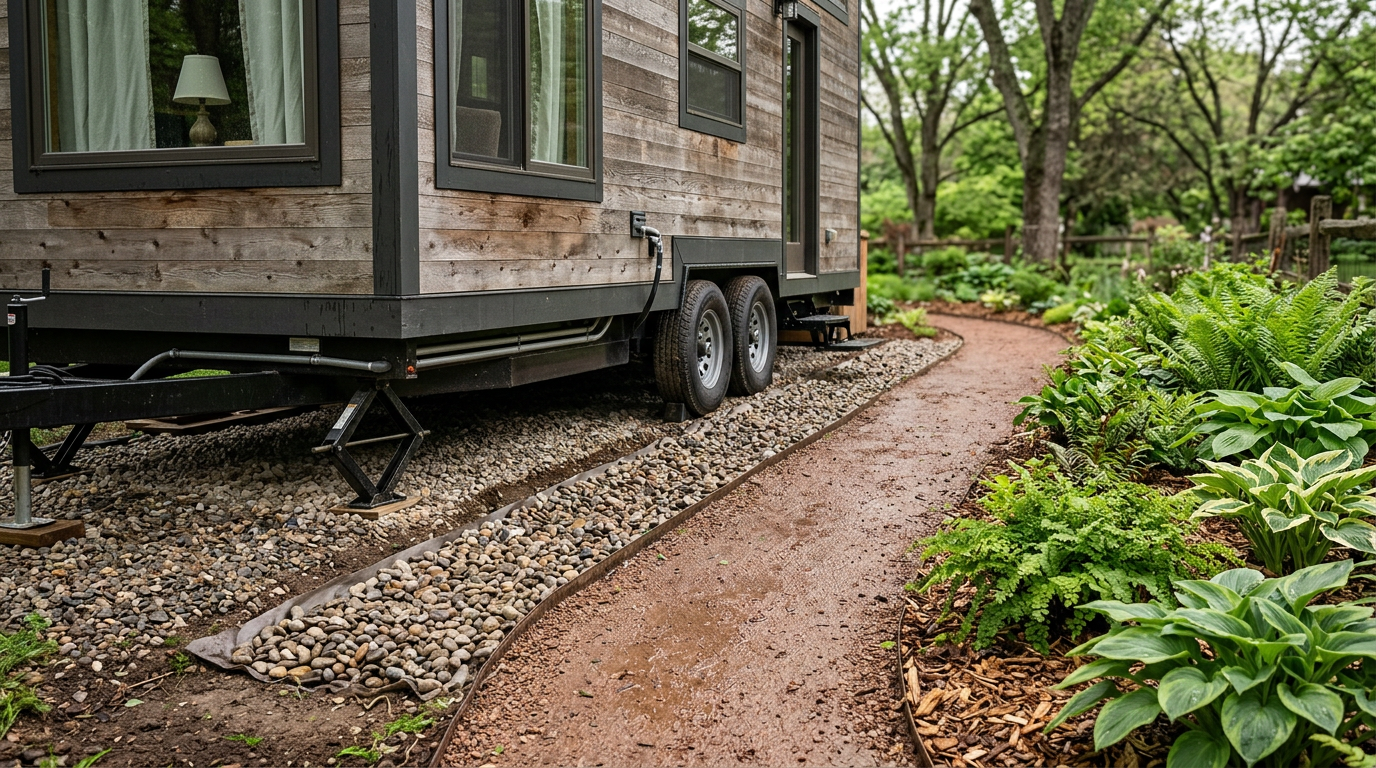
Before planting a single seed, you must address water flow. Tiny homes on wheels (THOWs) or small skid foundations alter the natural drainage pattern of your site. Heavy rain running off a metal tiny home roof can quickly erode the surrounding soil and pool under your trailer. To prevent this, dig a shallow French drain—a trench 30 cm [12 in] wide and 45 cm [18 in] deep—lined with non-woven geotextile fabric, filled with 20 mm [0.75 in] washed drainage gravel, and sloped away from the structure. This keeps your foundation dry and protects the roots of your future garden.
Once drainage is secure, map your micro-climates. Tiny homes cast distinct, sharp shadows due to their height-to-width ratio. The north side of your home might remain in perpetual shade, while the south side bakes in the afternoon sun. Observe these patterns for a week before deciding where to place your garden beds. Use the damp, shady zones for moisture-loving groundcovers like wild ginger or Irish moss, and save the hot, sunny spots for your primary outdoor living area and edible crops.
Going Vertical: Maximizing Tight Boundaries
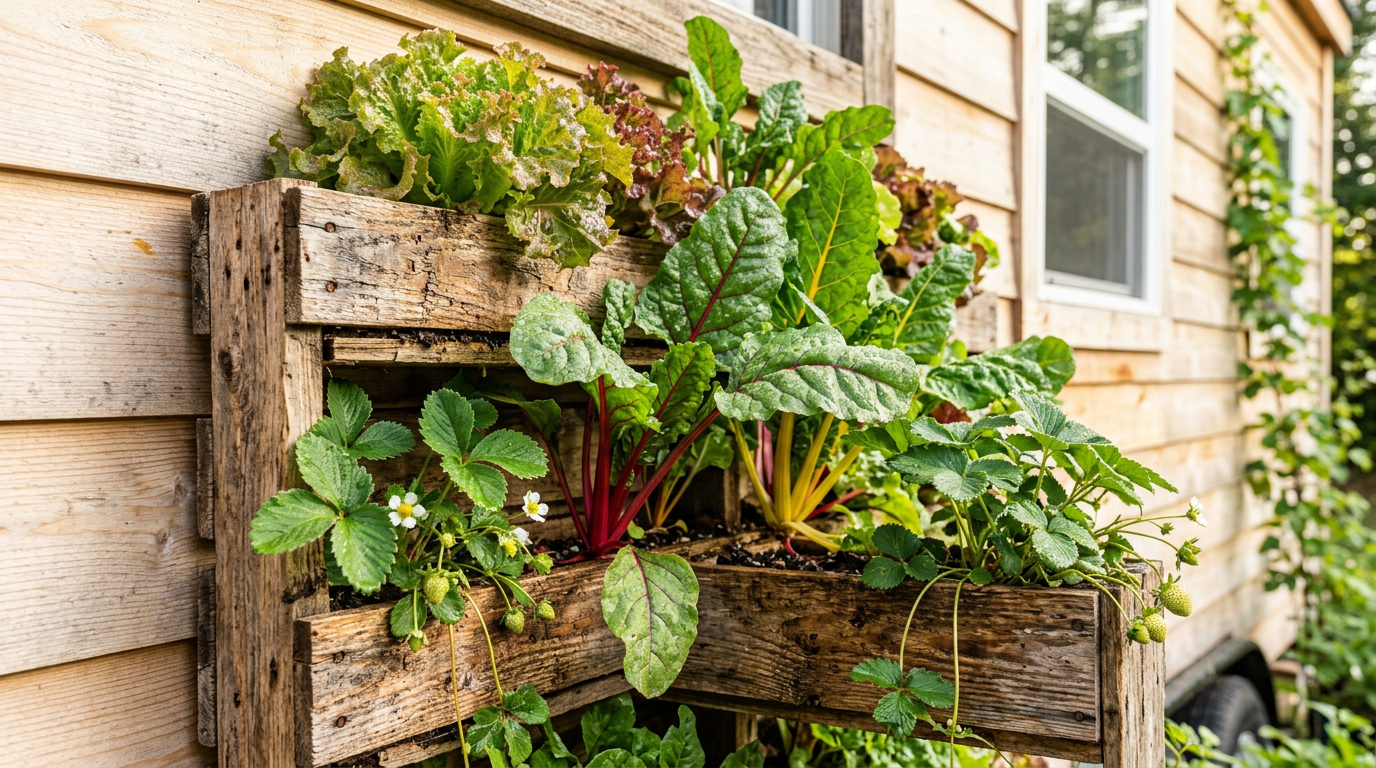
When ground space is limited, look up. Vertical gardening is the single most effective way to grow food and flowers without encroaching on your valuable outdoor footprint. Mounting planters directly to your tiny home’s exterior walls is highly effective, but you must protect your siding from moisture. Always build a free-standing trellis or mount planters on a spacer system that leaves at least a 50 mm [2 in] air gap between the planter backing and your house siding. This prevents rot and allows air to circulate freely behind the wet soil.
For a simple DIY solution, repurpose heat-treated shipping pallets or build a ladder-style planter frame using rot-resistant cedar. Angle the steps of the ladder to ensure that lower plants aren't completely shaded by those above. Drip irrigation lines can be easily snaked up these vertical structures, connected to a simple battery-powered hose timer. This setup delivers targeted watering directly to the roots, minimizing evaporation and conserving precious water—a vital consideration if you live off-grid.
Edible Landscaping: Beauty with a Purpose
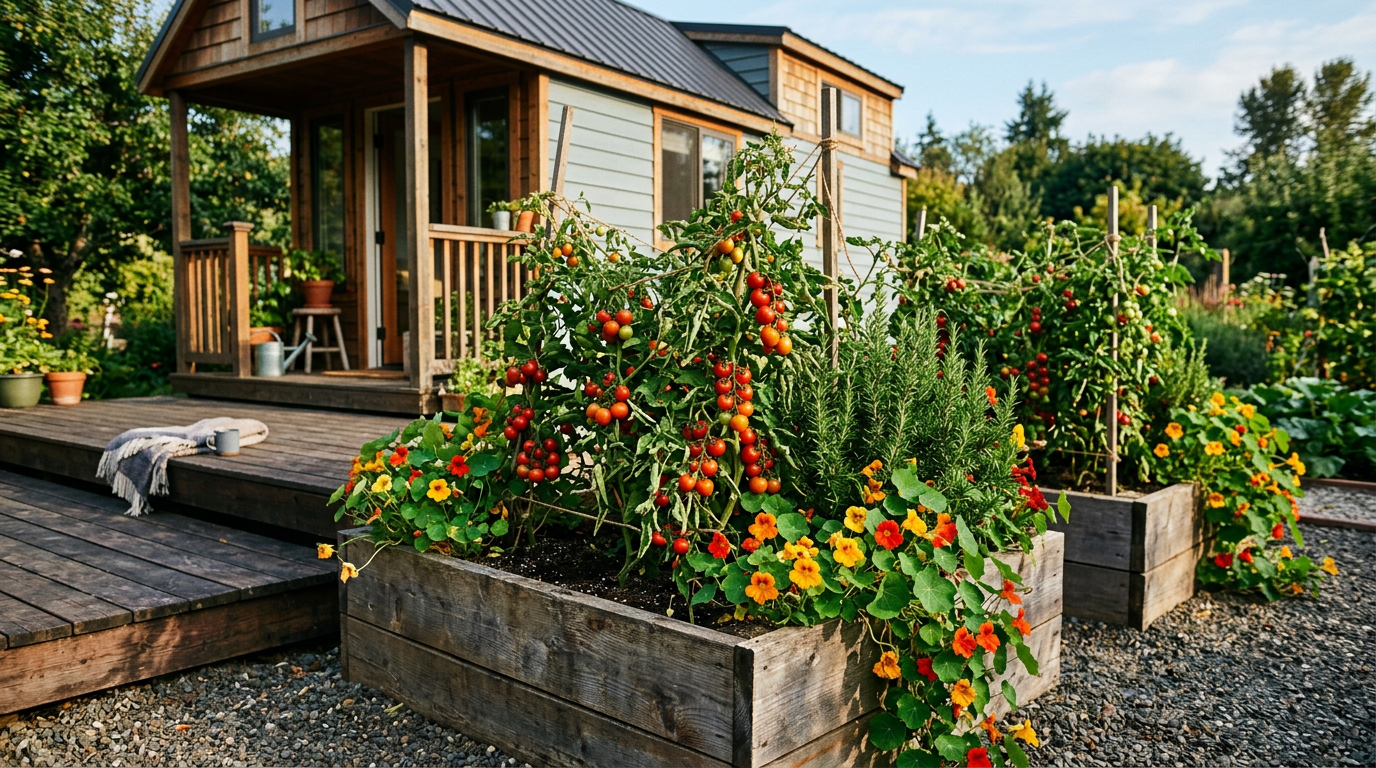
In a tiny home landscape, every plant should earn its keep. Edible landscaping blends ornamental beauty with food production, ensuring your yard is both gorgeous and productive. Instead of planting non-functional boxwood hedges, use culinary herbs like rosemary and lavender to frame your pathways. These hardy perennials require little maintenance once established, tolerate dry conditions well, and provide a fragrant sensory experience every time you walk to your front door.
Integrate edible companion plants into your ornamental borders. For example, plant bright orange nasturtiums alongside your tomatoes; not only are the leaves and flowers edible with a peppery kick, but they also act as a natural trap crop, drawing pests away from your main harvest. Dwarf fruit trees grown in large pots or trained against a sunny wall using the espalier technique can yield impressive amounts of apples, figs, or plums without taking up more than a few square feet of soil.
Container Gardens: Landscaping on the Move
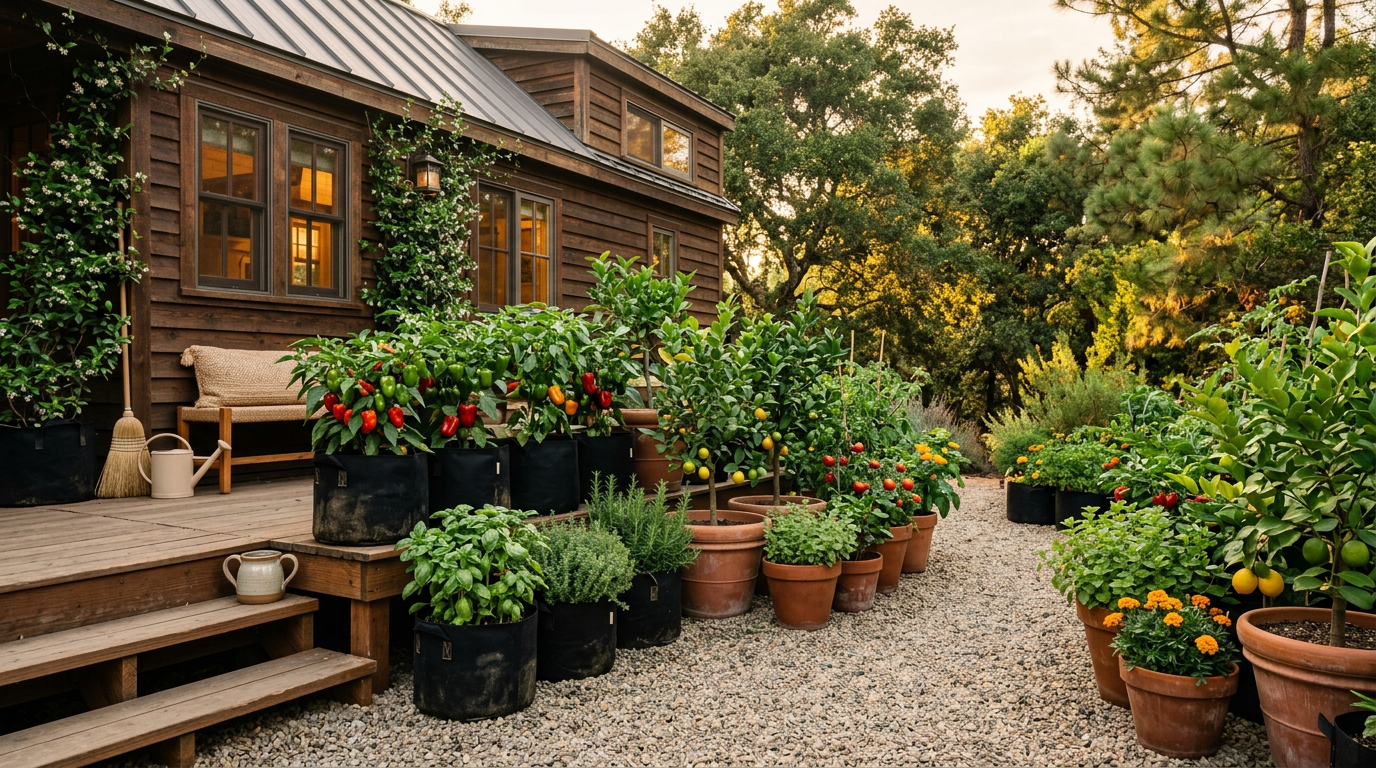
For tiny home dwellers who lease land or plan to move their home in the future, permanent in-ground landscaping is rarely practical. Container gardening offers the perfect, highly mobile alternative. Using lightweight materials like breathable fabric grow bags or durable resin pots makes it easy to pack up your entire garden when it is time to hit the road. Fabric pots are particularly beneficial for plant health, as they air-prune roots and prevent the plants from becoming root-bound, resulting in healthier, more productive growth.
To keep your container garden manageable, group pots by water and sunlight needs. Cluster thirsty plants together so you can water them efficiently in one pass. Use wheeled plant caddies under your heaviest pots so you can easily roll them out of the way when you need to access your home’s utility connections or prepare for high winds. By keeping your garden modular, your landscape can evolve and travel right alongside your tiny lifestyle.